Stainless steel water bottles are tough, practical, and great at keeping drinks cold or hot—but they can still develop that “why does it smell like… something?” problem. The good news: most water bottle smells come from residue trapped in the lid, gasket (seal), and straw, not the steel itself.
Hyeta pick
A simple place to start
If you want a practical motivational water bottle with time markers, a straw lid, and a carry strap, compare the current Hyeta options before you choose a size.
Below is a simple daily cleaning routine plus a weekly deep clean (baking soda or vinegar) that’s designed to actually remove odors—not just mask them.
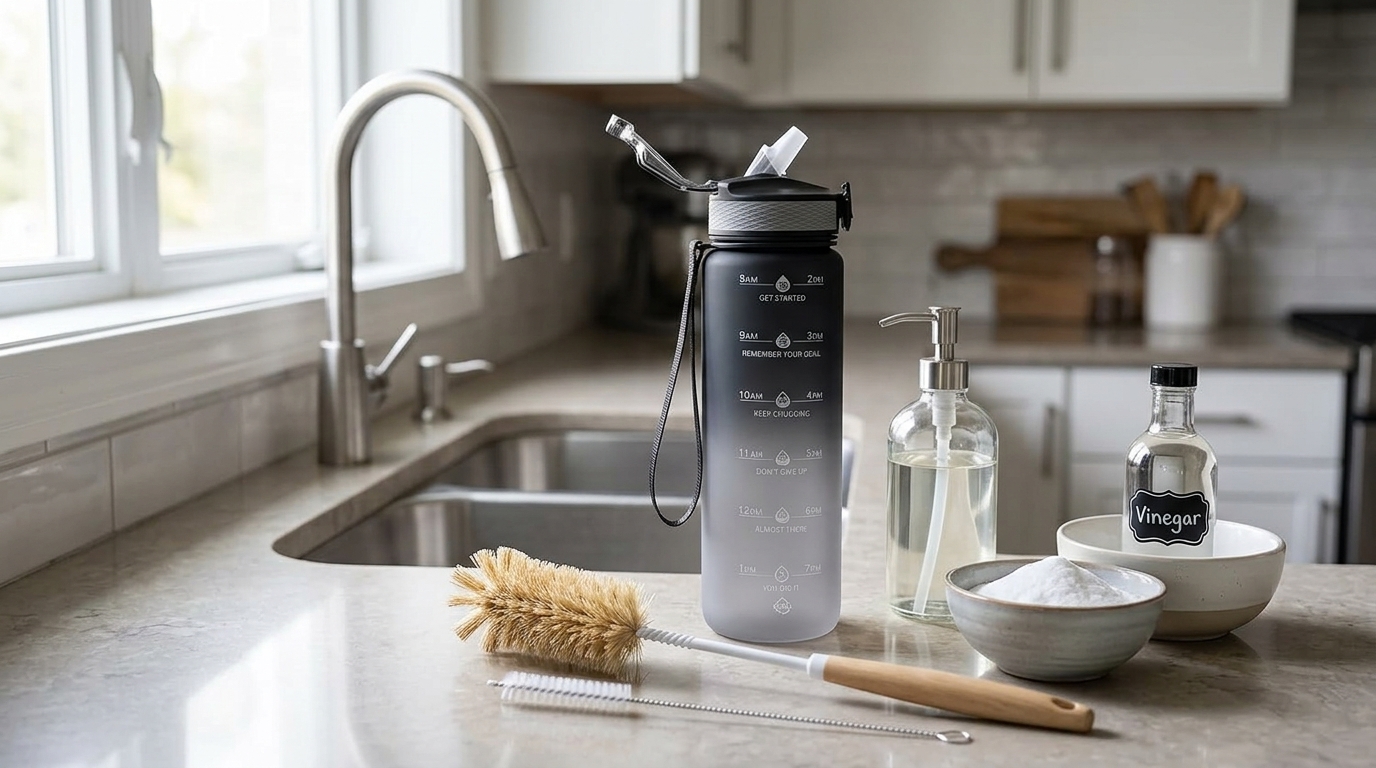
What you’ll need (simple + effective)
- Warm water
- Mild dish soap
- A bottle brush (long-handled)
- A straw brush (if your lid has a straw)
- Baking soda or white vinegar (for deep cleaning)
- A clean towel or drying rack for air-drying
If you’re shopping for a bottle that’s easy to keep in rotation for work/gym/travel, you can also check the Hyeta bottle on Amazon and keep one dedicated to water while another handles flavored drinks.
Daily routine: How to clean a stainless steel water bottle (5–7 minutes)
This is the baseline routine for how to clean stainless steel water bottle for everyday water use. Doing this consistently prevents buildup that turns into stubborn odor later.
Step 1: Disassemble everything
Take the bottle apart as much as the design allows:
- Remove the lid
- Remove the straw (if present)
- Pop out the silicone gasket/seal if it’s removable
Tip: If you’re not sure where the gasket is, check the underside of the lid—many smells live there.
Step 2: Wash with warm water + mild dish soap
- Add a few drops of mild dish soap to the bottle with warm water.
- Scrub the inside walls and bottom with a bottle brush.
- Wash the lid separately (especially threads, spout, and any crevices).
- Use a straw brush through the straw and any narrow channels.
This basic dish soap water bottle wash is often enough if done daily.
Step 3: Rinse thoroughly (more than you think)
Rinse bottle, lid, straw, and gasket under running water until there are no suds. Leftover soap film can trap odors and create an “off” taste.
Step 4: Air-dry completely with the lid off
Set the bottle upside down to drain, and let the lid, straw, and gasket dry separately. Avoid sealing the bottle while it’s even slightly damp—trapped moisture is a common cause of recurring smell.
How often to wash a water bottle?
| What you put in it | Recommended washing frequency | Why |
|---|---|---|
| Plain water | Daily (or at least every 1–2 days) | Biofilm can still build up, especially in lids/straws. |
| Electrolytes, flavored water | After each use | Sugars/acids increase residue and odor risk. |
| Coffee/tea | After each use + weekly deep clean | Oils/tannins cling and can smell quickly. |
| Protein shakes/smoothies | Immediately after use (same day) | High odor and bacterial growth risk if left sitting. |
Weekly deep clean: two options that actually remove smells
If your bottle smells even after normal washing, it’s time to deep clean. Choose one method below (no need to do both back-to-back). In most cases, the biggest improvement comes from deep-cleaning the lid + gasket + straw.
Option A: Baking soda water bottle soak (gentle, great for odors)
This is a go-to baking soda water bottle method for neutralizing smells.
- Fill the bottle with warm water.
- Add 1–2 teaspoons of baking soda and swirl to dissolve.
- Soak for 2–8 hours (overnight is fine for stubborn odors).
- Soak the lid, gasket, and straw in a separate bowl with the same solution.
- Scrub, rinse very well, and air-dry completely.
When to choose this: lingering “musty” smells, light flavor carryover, or if you want a mild, low-odor cleaning option.
Option B: Vinegar water bottle cleaning soak (cuts residue + helps with smells)
White vinegar is commonly used for deodorizing and breaking down residue. The key is dilution and thorough rinsing so you don’t trade one smell for another.
Compare before you buy
Check colors, sizes, and current price
Availability and colors can change, so it is worth checking the live Amazon listing before you decide.
- Mix a solution of 1 part white vinegar to 3–4 parts warm water.
- Fill the bottle and soak for 15–30 minutes (up to 1–2 hours if needed).
- Soak lid, gasket, and straw separately in the same solution.
- Scrub, rinse until the vinegar smell is gone, then air-dry fully.
When to choose this: sticky residue from flavored drinks, coffee/tea film, or if the bottle smells “sour” or stale.
After coffee or flavored drinks: do this the same day
Hot coffee, iced coffee, tea, and flavored drinks tend to leave oils, tannins, or sweeteners behind—especially in the lid and straw. Here’s a simple routine that prevents “perma-coffee bottle” syndrome:
- Rinse immediately after finishing (even a quick rinse helps).
- Do a full dish-soap wash as soon as you can.
- Run a straw brush through the straw at least once.
- Once a week, do a baking soda or diluted vinegar soak.
If you regularly switch between water and flavored drinks, it can help to keep a second bottle in your rotation—if you want an extra option, you can compare current colors on Amazon and dedicate one to water only.
What not to do (common mistakes that cause odors)
- Don’t close it while wet. A damp, sealed bottle is an odor incubator.
- Don’t ignore the lid/gasket. The steel bottle body often isn’t the problem.
- Don’t use harsh abrasives that scratch. Scratches can make residue harder to remove over time.
- Don’t let sweet drinks sit. Rinse and wash the same day—sooner is better.
- Don’t “cover up” smells with flavor packets. That usually makes buildup worse.
Troubleshooting: If it still smells after cleaning
If you’ve done the daily wash and a deep clean and it still smells, focus on the parts that trap residue:
1) Check the gasket (silicone seal)
Remove it (if possible) and smell it separately. If the gasket holds odor even after soaking and washing, it may need extra attention or replacement depending on the bottle design.
2) Scrub the lid’s hidden channels
Some straw lids have narrow air vents or internal pathways. Use a straw brush or small brush to reach the tight spots.
3) Deep clean again—short and targeted
Repeat either the baking soda soak (overnight) or the diluted vinegar soak (30–60 minutes), but make sure you soak the lid, straw, and gasket too. Rinse thoroughly and air-dry with parts separated.
4) Consider whether the smell is coming from your drink
Some electrolyte mixes and flavored powders have strong aromas that linger. Washing immediately after use makes a big difference.
Quick checklist: clean, deodorize, and keep it fresh
- Daily: warm water + mild dish soap, scrub all parts, rinse well
- Daily: air-dry completely with the lid off
- Weekly: baking soda soak or diluted vinegar soak (include lid, gasket, straw)
- After coffee/flavored drinks: wash the same day (ideally right after)
FAQ
Can I put my bottle in the dishwasher?
It depends on the specific bottle and lid materials. Many stainless steel bottles and some lids are advertised as dishwasher-safe, but lids (especially straw lids) often have parts and seals that can trap water or wear faster. If you do use a dishwasher, consider placing the lid parts on the top rack and still air-drying everything fully afterward. When in doubt, hand-washing is the safest, most consistent option.
Is it safe to use vinegar?
For most routine home cleaning, diluted white vinegar is commonly used. Use a diluted solution, avoid long soaks if you’re unsure how your lid materials will react, and rinse thoroughly until the vinegar smell is gone. If your bottle’s care instructions advise against it, follow the manufacturer guidance.
Why does it still smell after cleaning?
Usually because odor-causing residue is stuck in the lid, straw, or gasket, or because the bottle is being stored closed while damp. Disassemble, deep clean the parts separately, rinse thoroughly, and air-dry with the lid off.
Conclusion
A stainless steel bottle shouldn’t smell—when it does, it’s almost always fixable with a consistent daily wash and a weekly deep clean that targets the lid, gasket, and straw. Stick to mild dish soap for everyday cleaning, use baking soda or diluted vinegar when odors show up, and always dry with the bottle open.
If you’re looking for a practical straw bottle to keep in your everyday rotation, you can see the latest price on Amazon and consider keeping one bottle for water and another for flavored drinks to minimize odor carryover.