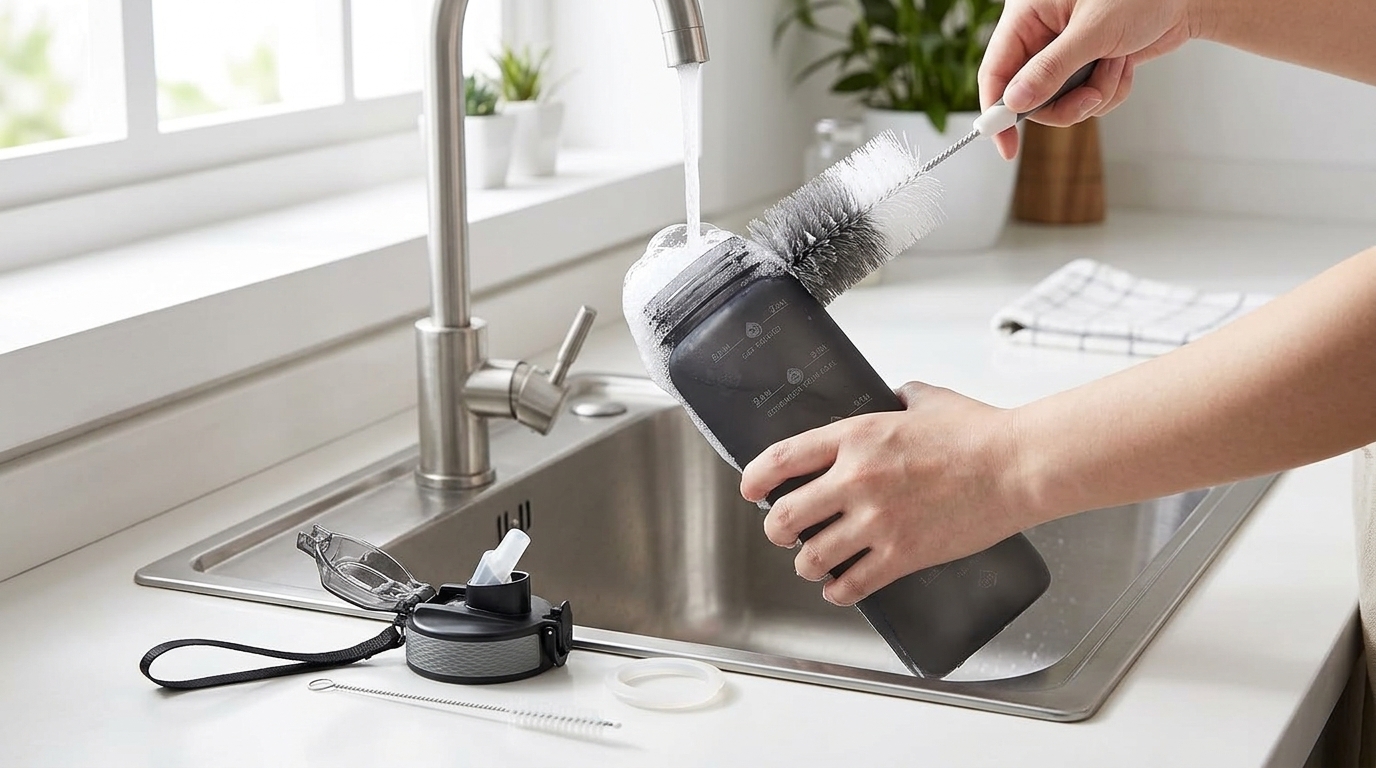
Straw lid water bottles are convenient—but they also have more tiny parts where moisture can hide (and where funk can start). If your bottle tastes funny, smells off, or you’ve spotted mold in the water bottle straw, the fix is usually a simple teardown, a proper soak, and—most importantly—a drying routine that keeps moisture from lingering.
Hyeta pick
A simple place to start
If you want a practical motivational water bottle with time markers, a straw lid, and a carry strap, compare the current Hyeta options before you choose a size.
Below is a practical, repeatable method for how to clean a water bottle with a straw, including a quick daily rinse, a weekly deep-clean, and exactly what to replace when smells won’t quit.
What you’ll need (simple, practical tools)
- Warm water + mild dish soap
- A bottle brush (for the bottle interior)
- A straw brush for water bottle (thin brush for straw + mouthpiece)
- A small bowl or container for soaking parts
- Optional deep-clean: denture/retainer cleaning tablets (used occasionally)
If you’re shopping for a straw bottle you can keep on a consistent routine, you can check the Hyeta bottle on Amazon and keep a second lid or spare parts on hand so you’re never tempted to “just rinse it” for weeks.
The 2-minute daily routine (prevents most odor)
This takes about two minutes and dramatically cuts down on smell and buildup—especially if you use anything besides plain water (electrolytes, flavored mixes, coffee/tea, smoothies).
- Empty and rinse immediately. Don’t let liquid sit overnight.
- Fill 1/3 with warm water + a drop of dish soap. Close the lid and shake for 10–15 seconds.
- Drink-through rinse for straw lids. Pull a few sips of the soapy water through the straw, then rinse with clean water and pull clean water through as well.
- Air-dry fully. Leave the bottle open on the counter to dry; set the lid aside separately.
Key habit: The bottle can look clean but still smell because moisture sits in the straw or lid. Daily airflow is prevention.
Weekly deep-clean routine (15–25 minutes total)
Do this weekly (or more often if you use sweetened drinks, milk-based drinks, or if your bottle is used for school/gym and sits in a bag).
Step 1: Disassembly checklist (don’t skip the hidden parts)
For how to clean straw lid water bottle parts correctly, take it apart as far as the design allows.
- Straw: remove and separate any upper/lower segments
- Bite valve / mouthpiece: pop it off if removable
- Silicone gasket/O-ring: remove the seal from the lid (this is the #1 odor trap)
- Any inner spout pieces: check for a small insert or valve
Tip: If your lid has a silicone seal and you’ve never removed it, odds are high that’s where the smell is coming from—even when the bottle itself looks spotless.
Step 2: Wash with warm soapy water (the “default” clean)
- Bottle: wash inside with a bottle brush and warm soapy water. Scrub the shoulder area (where the neck meets the body), which often holds residue.
- Straw: run a straw brush through from both ends until it comes out clean.
- Mouthpiece/bite valve: scrub gently, paying attention to grooves.
- Gasket/O-ring: wash separately between fingers with soap; lightly scrub if it has ridges.
- Rinse thoroughly: soap left behind can create a “funny taste.”
Step 3: Dishwasher option (only if your bottle/lid is rated for it)
Dishwashers can be great for consistency—but only if the manufacturer says the parts are dishwasher-safe.
- Place lids and small parts on the top rack (or in a small parts basket if you have one).
- Separate the gasket/O-ring and straw so water can reach all surfaces.
- Avoid high-heat cycles for parts that can warp (especially softer silicone).
If your bottle is dishwasher-safe, consider making the weekly deep-clean a dishwasher day—and hand-wash only when needed.
Step 4: Occasional deep-clean soak (denture/retainer tablet method)
If you’re dealing with water bottle tastes funny issues or lingering odor, a denture/retainer tablet soak can help as an occasional deep-clean alternative—especially for straw and lid parts. This isn’t required weekly for most people; think of it as a reset when your regular wash isn’t enough.
Compare before you buy
Check colors, sizes, and current price
Availability and colors can change, so it is worth checking the live Amazon listing before you decide.
- Fill a bowl with warm (not boiling) water.
- Add a denture/retainer cleaning tablet per package directions.
- Soak straw, mouthpiece, and gasket for the recommended time.
- Rinse extremely well and air-dry completely.
Important: Always follow the tablet package directions and avoid long soaks on parts if the manufacturer warns against it. When in doubt, use warm soapy water as your primary method.
Odor but no visible mold? Here’s the usual culprit
If your bottle looks clean but smells off, the issue is almost always in the lid system—especially with straw designs.
Troubleshooting checklist (fast)
- Smell the straw alone. If it smells, it needs brushing and/or an occasional soak.
- Smell the gasket/O-ring. If it smells, wash it separately; consider replacing if the odor persists.
- Check the bite valve grooves. Tiny creases can trap residue.
- Confirm it’s fully dry between uses. A “clean but wet” straw can still develop odor quickly.
How to dry it so mold doesn’t come back
Cleaning removes buildup; drying prevents regrowth. Mold and bacteria thrive where moisture is trapped and airflow is limited—exactly the conditions inside a straw and under a gasket.
- Dry with parts separated: bottle open, lid open, straw removed, gasket removed.
- Stand the straw upright or lay it where air can pass through it (not sealed in a drawer).
- Wait until fully dry before reassembling. If it still feels damp inside, give it more time.
- Don’t store closed after washing. Storing the bottle sealed can trap humidity and restart the cycle.
When to replace parts (instead of endlessly cleaning)
Some odors are “sticky” because materials wear out over time. Here’s when replacement is the more practical choice.
| Part | Replace when you notice… | Why it matters |
|---|---|---|
| Straw | Cloudiness that won’t clear, cracks, permanent odor, or visible staining | Micro-scratches and wear can hold odor and residue |
| Silicone gasket/O-ring | Stretching, flattened areas, nicks/tears, or smell that returns quickly | A worn seal can trap moisture and may affect leak resistance |
| Bite valve / mouthpiece | Sticky feel, deformation, persistent taste, or buildup in grooves | Grooves are hard to scrub perfectly once worn |
If you’re in the market for a new daily bottle (or a backup so you can rotate while parts dry), you can see the latest price on Amazon for the Hyeta 32oz straw bottle.
Printable cleaning schedule (simple and realistic)
Copy/paste and print this section, or save it as a note. Consistency beats occasional “mega cleans.”
| Frequency | What to do | Time |
|---|---|---|
| Daily | Rinse + quick soap shake; pull soapy water through straw; rinse; air-dry open | ~2 minutes |
| Weekly | Full disassembly; scrub bottle; straw brush through straw; wash gasket; rinse; dry separated | ~15–25 minutes |
| Monthly (or as needed) | Occasional denture/retainer tablet soak for straw, mouthpiece, gasket; rinse very well | ~10–20 minutes active time |
| As needed | Replace cloudy/odor-holding straw; replace stretched or smelly gasket; replace worn bite valve | Varies |
Quick FAQ
Is it safe to drink from a straw bottle if it smells weird?
A persistent odor is a sign something is lingering in the lid/straw system (often residue and moisture). The safest approach is to stop using it until you’ve disassembled, thoroughly cleaned, and fully dried all parts. If the smell persists after a proper deep-clean, replacing the straw and/or gasket is a smart next step.
What’s the fastest way to prevent mold in a water bottle straw?
Three habits: (1) pull soapy water through the straw during daily washing, (2) deep-clean weekly with a straw brush, and (3) dry the straw and lid separately with airflow.
Can I just soak the whole lid and call it done?
Soaking helps, but it’s rarely enough by itself. Mold and odor commonly hide under the gasket and inside the straw—areas you can’t reach unless you disassemble and brush.
Bottom line
If you take away one thing: cleaning fixes today’s odor, drying prevents tomorrow’s mold. Disassemble the straw lid, wash and brush the straw and gasket, rinse thoroughly, and let everything dry completely before reassembling.
And if you want a practical straw bottle for daily hydration, you can compare current colors on Amazon for the Hyeta 32oz bottle and keep your routine easy to stick with.
Note: If you’re ever unsure about care instructions, defer to your bottle’s manufacturer cleaning guidance (especially for dishwasher use and high-heat washing).