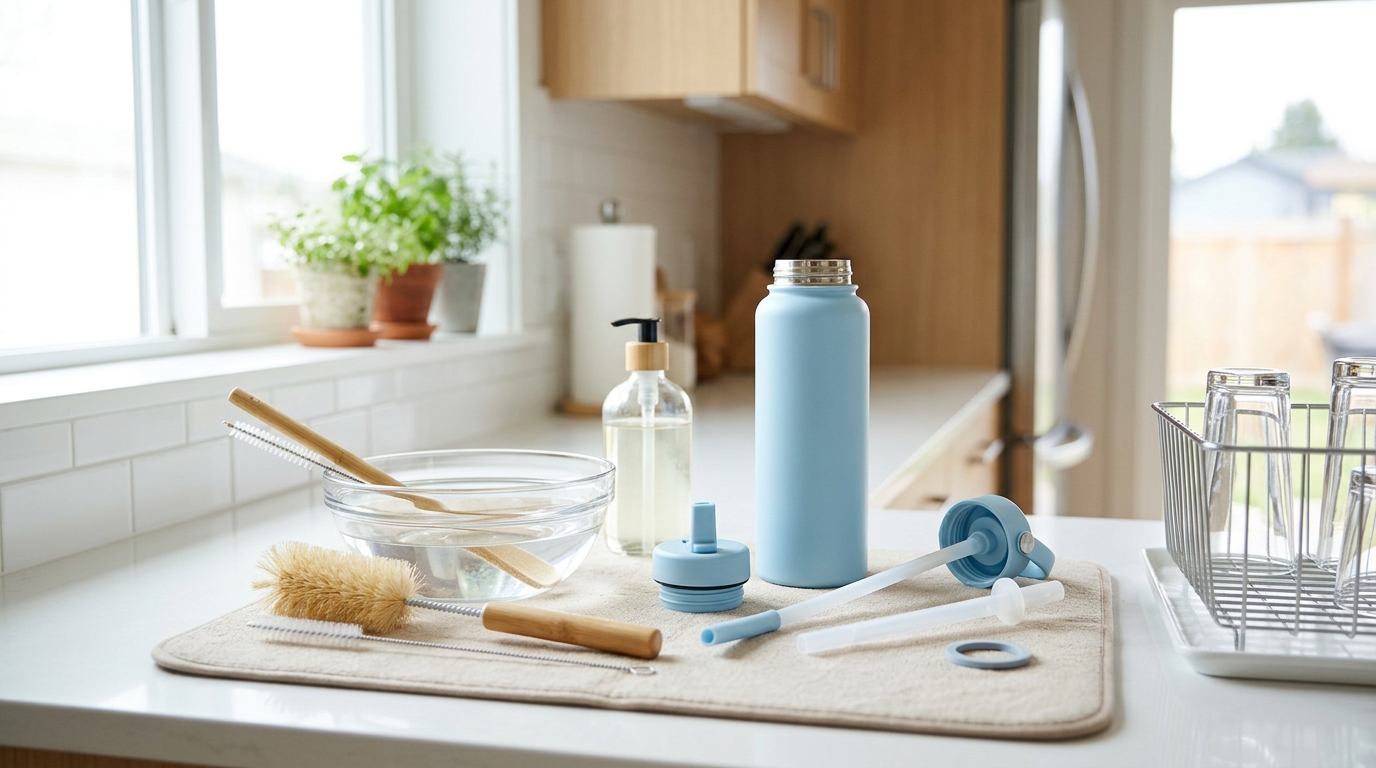
Before you start: identify your bottle’s material & lid parts
Dishwasher notes (what’s usually safe—and what to double-check)
Many bottles and lids are labeled dishwasher-safe, but “dishwasher-safe” can still mean: top rack only, limited heat, or specific parts only. When in doubt, check your brand’s instructions.
Hyeta pick
Compare the current Hyeta bottle options
If you want a practical bottle for work, gym, travel, or everyday carry, check the current Hyeta listing before you choose your lid style and size.
General dishwasher tips
- Top rack for lids and straws (reduces heat warping risk).
- Disassemble so water can reach hidden surfaces.
- Skip heated dry if your lid parts tend to warp or trap detergent taste.
- Post-cycle dry: Even after the dishwasher, straw lids often hold droplets—shake out water and air-dry parts fully.
If your bottle is insulated stainless steel
Some insulated bottles are dishwasher-safe, but others recommend hand-washing to protect finishes or seals. If you’re trying to maximize longevity, hand-washing the bottle body and focusing dishwasher use on lid parts can be a good compromise (as long as your lid is dishwasher-safe).
A repeatable schedule (copy/paste routine)
Here’s a realistic cadence for most people using a straw bottle daily.
| Frequency | What to do | Time |
|---|---|---|
| Daily | Empty, warm rinse, quick soap scrub on mouthpiece area, air-dry fully (open/disassembled). | 2–3 min |
| Weekly | Full disassembly + dish soap wash; brush straw; scrub lid threads/valves; remove and wash gasket if designed to be removable; air-dry. | 10–15 min |
| Monthly | Gasket inspection (stretch/tears), check straw for cloudiness/cracks, optional deodorizing soak if needed. | 5–10 min |
| As needed | Replace straw/gasket if odor persists or parts show wear. | Varies |
FAQ
Why does my water bottle smell like mildew even after washing?
Most often it’s because moisture is trapped in the straw, lid channels, or gasket groove. Disassemble fully, brush the straw, remove and wash the gasket (if removable), and then air-dry every part completely before reassembling.
Hyeta pick
Match the bottle to your routine
Compare colors, sizes, and current availability so your bottle fits the way you actually carry and refill it each day.
Is it enough to just rinse a straw bottle?
Rinsing helps, but it won’t reliably remove residue inside the straw. For a true clean straw water bottle routine, plan on brushing the straw weekly (more often if you use flavored drinks).
Can I use bleach?
Some manufacturers provide specific directions for sanitizing with diluted bleach; others advise against it due to material compatibility and taste retention. If you’re considering bleach, check your bottle maker’s instructions first and rinse extremely thoroughly. When in doubt, brushing + thorough drying + replacing soft parts is a safer, simpler path.
Hyeta pick
Ready to decide?
A quick look at the live listing helps confirm current price, color availability, and the details that matter for daily use.
Bottom line: clean + dry beats “stronger cleaner”
If you want a bottle that stays fresh, focus on three habits: (1) disassemble, (2) brush the straw and gasket area, and (3) air-dry completely. Do that daily/weekly, and you’ll prevent most odor and mold issues before they start.
Need to refresh your setup? Start with the parts that hold smell the longest: $3, then $3 and $3.