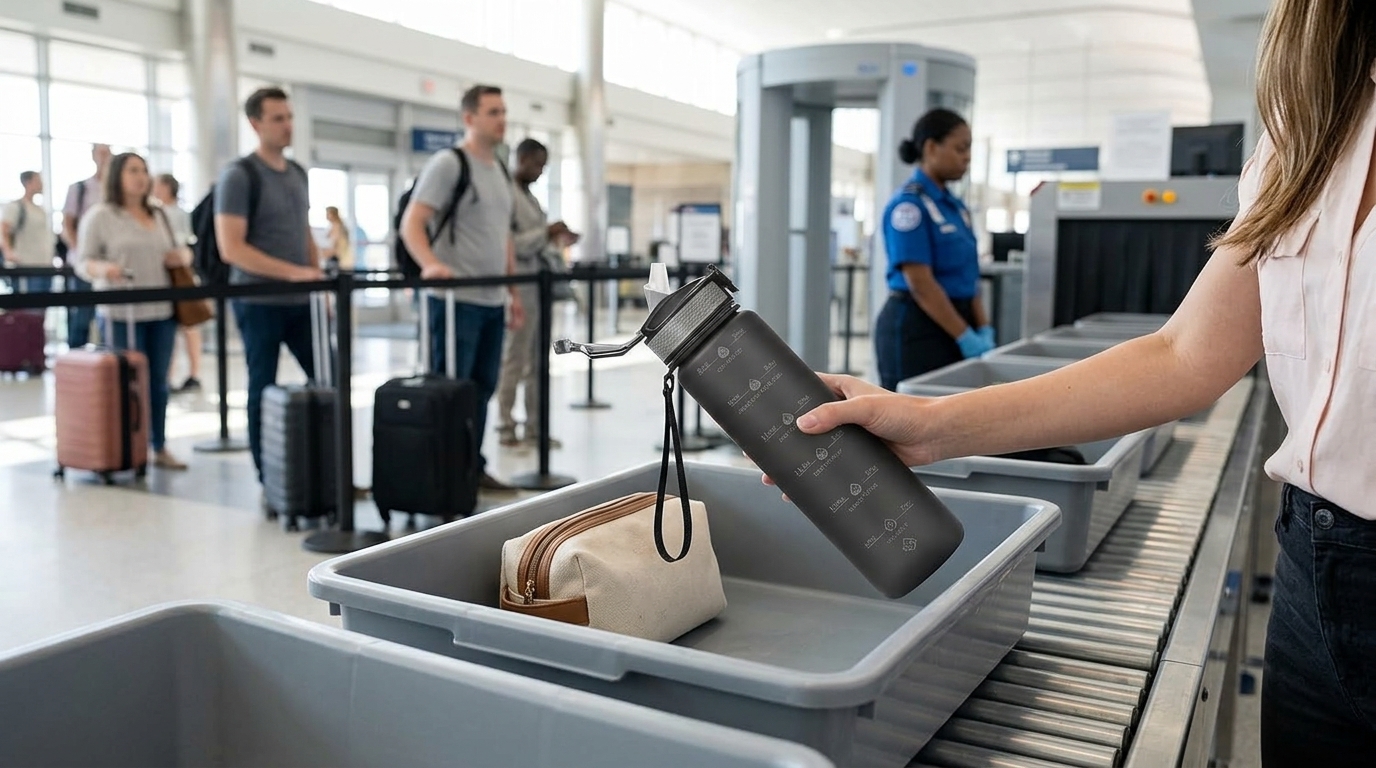
Yes—you can bring a reusable water bottle through TSA, including in your carry-on, as long as it’s empty when you go through the checkpoint. This guide explains the “empty bottle” rule in plain English, covers common edge cases (ice, residual liquid, flavored drinks), and gives practical packing steps so your bottle doesn’t leak in your bag on the way to (or from) the airport.
Hyeta pick
A simple place to start
If you want a practical motivational water bottle with time markers, a straw lid, and a carry strap, compare the current Hyeta options before you choose a size.
Quick answer: Is an empty water bottle allowed through TSA?
An empty reusable water bottle is allowed through TSA screening. The key is that it must be empty at the checkpoint. After you clear security, you can refill it at a water fountain, bottle filling station, or from a post-security purchase.
- Carry-on: Allowed if empty at screening.
- Personal item: Allowed if empty at screening.
- Checked bag: Allowed (but pack smart to avoid leaks or damage).
What TSA actually cares about: liquid at the checkpoint
TSA’s restrictions apply to liquids, gels, and aerosols at the screening point. Your bottle itself is fine; what’s inside it is what can cause a bag check or a request to dump it.
Common “gotchas” that can stop you at security
- “It’s basically empty.” If there’s liquid inside (even a small amount), you may be asked to pour it out before proceeding.
- Flavored drinks or electrolyte mixes: They’re still liquids. If it’s in your bottle at the checkpoint, it’s treated like any other beverage.
- Slushy or semi-frozen liquid: If it’s not fully solid, it can be treated like a liquid.
Can you bring ice in a water bottle through TSA?
If your bottle has ice only (fully frozen/solid) at the checkpoint, it’s generally treated differently than a liquid. The issue comes when the ice is melting: if there’s liquid water in the bottle, you may be required to dump it. For the smoothest experience, go through security with the bottle completely empty, then add ice after you’re past screening.
Easy traveler workflow (low-stress)
- Before security: Empty your bottle completely.
- At security: Place it in your bag or in the bin as directed.
- After security: Refill at a bottle filling station (many US airports have them near restrooms or water fountains).
- Before boarding: Top it off so you’re not relying on limited in-flight service.
Carry-on vs. checked bag: what’s best for your bottle?
For most people, a reusable bottle is best in your carry-on/personal item so it doesn’t get banged around or exposed to rough handling. If you do pack it in checked luggage, protect the lid and keep it empty.
Carry-on packing tip
Pack the bottle where you can reach it quickly. If TSA needs a closer look (for example, a dense metal bottle can look “solid” on the scanner), you’ll want to grab it without unpacking your whole bag.
Checked-bag packing tip
- Keep it empty and dry.
- Place it along the side of the suitcase with soft items around it to reduce dents and lid stress.
Leakproof packing checklist (do this before you leave home)
Even “leakproof” bottles can leak if the seal is dirty, the lid isn’t fully seated, or pressure changes stress the threads. Use this quick checklist to reduce surprises in your bag.
1) Check the gasket (O-ring) and lid threads
- Make sure the gasket is present and seated flat (not twisted).
- Wipe the rim and threads—tiny debris or sticky residue can prevent a full seal.
2) Engage the lid lock (if your bottle has one)
If your bottle has a locking mechanism, use it for travel. It helps prevent accidental opening when your bag gets squeezed in overhead bins or under the seat.
3) Do the 30-second upside-down test
At home (over the sink): fill it, close it, lock it, then hold it upside-down for 30 seconds. If you see even a slow bead of water, fix the seal or choose a different lid before travel day.
Compare before you buy
Check colors, sizes, and current price
Availability and colors can change, so it is worth checking the live Amazon listing before you decide.
4) Pack it like it might leak (because travel is unpredictable)
- Keep the bottle in an outer pocket if your bag has one—so a leak doesn’t soak electronics or clothing.
- Consider placing it in a simple waterproof pouch or a dedicated water-bottle sleeve if you’re carrying a laptop.
In-flight leak notes: altitude, temperature, and pressure changes
Cabin pressure and temperature shifts can make small seal issues more obvious. A bottle that never leaks at the gym can start to seep in a tightly packed bag on a flight. If you’re traveling with a straw-lid bottle, close it firmly and use the lock (if available) before stowing it. Also avoid overfilling—leaving a little headspace can help reduce pressure on the seal.
Mini buyer checklist: best water bottle for flying (practical features)
If you fly often, a bottle that’s easy to operate and easy to clean makes travel smoother. Look for:
- One-hand open: Useful when you’re carrying a backpack or pulling a roller bag.
- Locking lid: Helps prevent accidental openings in a packed carry-on.
- Leak-resistant seal: A good gasket and solid lid design matter more than marketing claims.
- Cupholder fit: Helpful for airport shuttles, rental cars, and some seat-back cupholders.
- Easy cleaning on the road: Wide openings and simple parts are less hassle in hotel sinks.
A solid travel-friendly option to consider
If you want a practical, everyday travel bottle with a straw lid and a design meant for leak resistance, you can check the Hyeta bottle on Amazon. If you’re picky about aesthetics, it also helps to compare current colors on Amazon before you commit.
Airport-day routine: from curb to gate without dehydration
- Fill at home, then drink or dump before TSA: If you like sipping on the way to the airport, plan a final “finish line” sip before entering security.
- Empty fully (cap off) at the checkpoint: Keep the lid on so the bottle stays clean in bins.
- Refill immediately after screening: Don’t wait until you’re at the gate—filling stations can be busy.
- Top off before boarding: Especially for longer flights or if you know you’ll be in a window seat.
FAQ: TSA refillable water bottle questions travelers ask
Can you bring a water bottle through airport security if it’s empty?
Yes. An empty water bottle is allowed through the checkpoint. Refill after security.
What if there’s a tiny bit of water left in the bottom?
If there’s any liquid, you can be asked to pour it out. To avoid delays, empty it completely before you get in line.
Can I bring an empty bottle and powdered drink mix?
Powders are handled differently than liquids, and screening practices can vary. The simplest approach is to carry your empty bottle and buy or mix drinks after security if you want to minimize hassle.
Is a water bottle considered a carry-on item?
Typically it’s treated like any other personal item you’re carrying, but airlines differ on what they count as an “item.” To be safe, place it inside your carry-on or personal item when boarding.
Bottom line
You can bring a reusable bottle through TSA—just make sure it’s empty at screening. After security, refill early, keep the lid locked when you stow it, and do a quick seal check at home to prevent leaks in your bag. If you’re shopping for a travel-friendly option, you can see the latest price on Amazon and decide if the size and lid style fit your airport routine.
Note: Screening decisions can vary by airport and situation. If you’re unsure about a specific scenario (for example, ice that’s partially melted), plan for the simplest path: go through the checkpoint with the bottle empty and refill afterward.