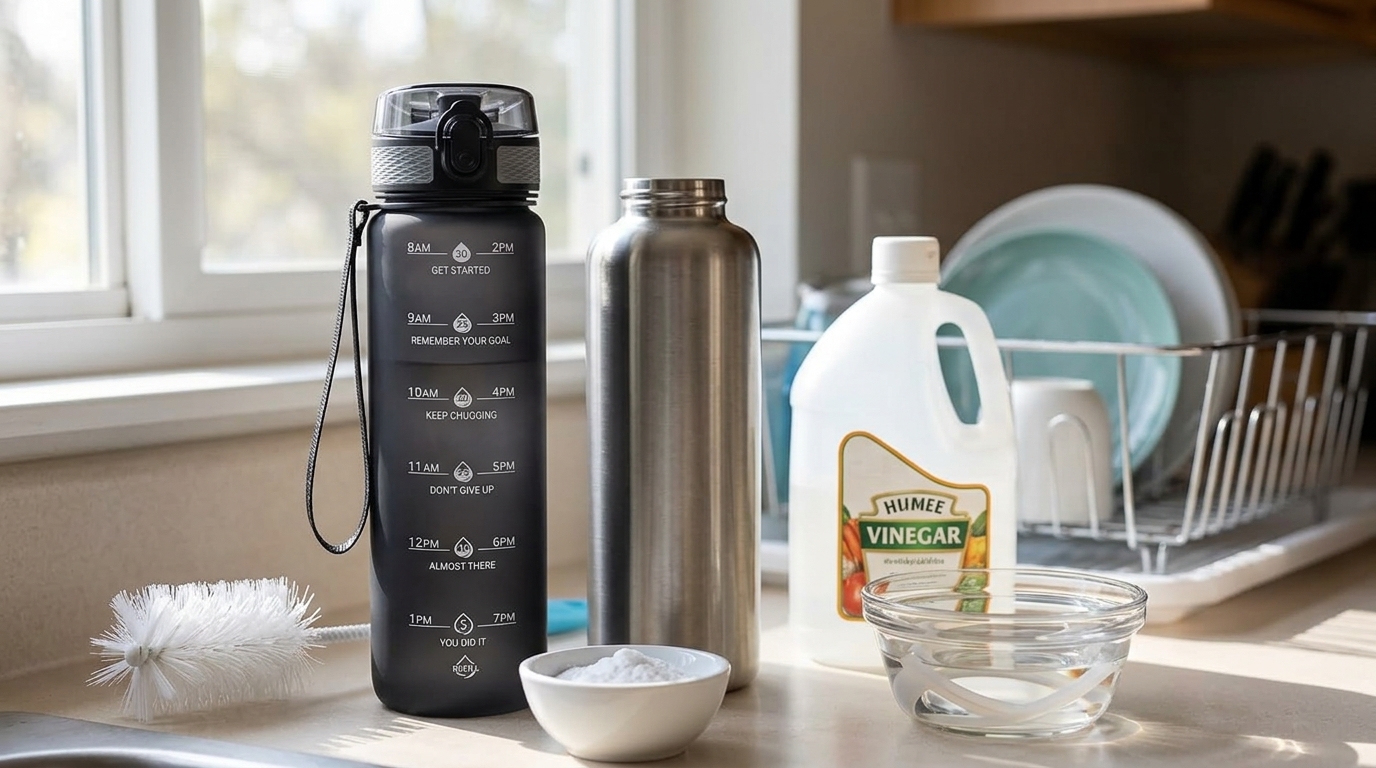
That weird smell in a reusable water bottle is usually a simple combo of three things: (1) biofilm (a thin layer of microbes) from sitting water, (2) leftover residue from flavored drinks, and (3) trapped moisture in the lid, straw, or gasket. The good news: you don’t need harsh chemicals—just the right method for the type of odor.
Hyeta pick
A simple place to start
If you want a practical motivational water bottle with time markers, a straw lid, and a carry strap, compare the current Hyeta options before you choose a size.
This guide is set up like a decision tree. First, identify the odor type, then jump to the safest method that matches it. If you want a bottle that’s easy to brush and maintain daily, you can also check the Hyeta 32oz bottle with straw on Amazon.
Quick decision tree: match the smell to the fix
- Stale water / “pondy” smell: Start with Method 1 → Method 2 → Method 3.
- Sweet drink / coffee / smoothie residue: Method 1 → Method 3 → Method 5.
- Water bottle smells like plastic (new bottle): Method 2 → Method 4 (gentle) → Method 7.
- Smell is strongest in lid/straw: Method 6 (gasket + straw focus) + Method 7.
- Odor returns quickly after “cleaning”: You likely missed the gasket/straw or sealed it while damp—use Methods 1 + 6 + 7.
Why water bottles get smelly (stainless or plastic)
- Biofilm buildup: Even if the bottle looks clean, a slippery film can form inside, especially around threads and at the bottom curve.
- Lid and straw hotspots: Narrow channels, valves, and straws trap moisture and residue—this is a common reason people can’t remove odor from a stainless steel water bottle even after washing the main body.
- Trapped moisture: Putting the lid on a damp bottle creates a humid “incubator” smell over time.
- New plastic/silicone smell: Some plastics and silicone parts can have a “factory” odor that fades with washing, soaking, and airing out.
Before you start: a simple checklist
- Disassemble everything: lid pieces, straw, mouthpiece, and gasket/O-ring.
- Use warm water and dish soap first unless the bottle is brand-new and only smells like plastic.
- Have the right tools: a bottle brush and a small straw brush make a huge difference. (If you’re shopping for a bottle that’s built for easy daily cleaning, you can see the latest price for the Hyeta straw bottle on Amazon.)
7 methods that actually work (start gentle, step up as needed)
Method 1) Dish soap + full scrub (best first step for most smells)
Best for: general funk, “how to clean a water bottle that smells,” sweet drink residue, everyday maintenance.
- Fill the bottle halfway with warm water + a few drops of dish soap.
- Scrub the inside thoroughly with a bottle brush, paying extra attention to the bottom curve and the threads.
- Scrub the lid, straw, and mouthpiece separately (use a small straw brush if you have one).
- Rinse until there are no suds or soap smell.
Tip: If your bottle is insulated stainless steel, avoid filling it with boiling water. Hot tap water is usually enough for this step.
Method 2) Hot water soak (simple and surprisingly effective)
Best for: stale water smell, “new bottle” odors, light plastic smell.
- Fill the bottle with very warm (not boiling) water.
- Let it soak 30–60 minutes.
- Soak lid parts and straw in a separate bowl of warm water.
- Scrub quickly after the soak, then rinse well.
If your water bottle smells like plastic and it’s brand new, do Method 2 a couple times and follow with Method 7 (air-dry protocol).
Method 3) Baking soda soak (odor neutralizer for stubborn funk)
Best for: baking soda water bottle smell removal, lingering musty odors, sweet residue smell that won’t quit.
- Add 1–2 teaspoons of baking soda to the bottle.
- Fill with warm water, close, and shake.
- Let soak 4–12 hours (overnight is fine).
- Scrub and rinse very well.
For lid/straw: Put baking-soda water in a bowl and soak the straw and gasket separately for the same time.
Method 4) Vinegar rinse/soak (use carefully, don’t mix with other cleaners)
Best for: vinegar water bottle smell troubleshooting, “new plastic” odor, and some mildew-like smells—especially in lids.
Safety notes: Never mix vinegar with bleach or other disinfectants. Rinse between methods. Vinegar has a strong smell, but it usually dissipates after thorough rinsing and air-drying.
- Mix a solution of 1 part white vinegar to 4 parts warm water.
- Soak the bottle 30–60 minutes (longer isn’t always better).
- Soak lid, straw, and gasket in a separate bowl.
- Scrub, then rinse until the vinegar smell is gone.
If the bottle still smells vinegary after rinsing, do a quick Method 2 warm-water soak, then air-dry fully (Method 7).
Compare before you buy
Check colors, sizes, and current price
Availability and colors can change, so it is worth checking the live Amazon listing before you decide.
Method 5) Bottle cleaning tablets (low effort, great for travel)
Best for: tough recurring odor, travel cleaning, when scrubbing is hard to keep up with.
Follow the tablet brand’s directions (timing matters). Generally, you’ll fill the bottle with water, drop in a tablet, wait, then rinse thoroughly. Tablets can be especially helpful for straw lids where residue hides in small channels.
Important: Whatever product you choose, avoid leaving strong solutions sitting longer than recommended, and rinse completely so there’s no chemical taste.
Method 6) Gasket + straw deep clean (the “I already washed it!” fix)
Best for: smells that come back fast, odor that’s strongest at the mouthpiece, and any straw-lid funk.
- Remove the gasket/O-ring (use clean hands; don’t stab it with anything sharp).
- Soak gasket and straw in warm soapy water, then scrub gently.
- If odor persists, soak these parts separately using Method 3 (baking soda) or Method 4 (diluted vinegar), then rinse well.
- Dry parts completely before reassembling.
Why this works: Silicone gaskets hold onto smells more than the bottle body. If you’re shopping for a daily bottle that’s easy to take apart and keep fresh, you can compare current Hyeta bottle colors on Amazon.
Method 7) Sunlight + total air-dry protocol (prevents odor from returning)
Best for: preventing recurring smells, finishing a deep clean, and reducing “stored in a cabinet” odors.
- After rinsing, shake out excess water.
- Set bottle upside down on a drying rack so air can circulate.
- Leave lid, straw, and gasket separated while drying.
- If practical, give parts a short period of indirect sunlight near a window (don’t bake plastic in extreme heat).
- Only reassemble once everything is fully dry.
What not to do (common mistakes that make smells worse)
- Don’t seal the bottle while damp. This is a top cause of recurring odors.
- Don’t mix cleaning chemicals. Especially never mix vinegar with bleach or disinfectants.
- Don’t use harsh abrasives (steel wool, overly abrasive powders) on plastic. Scratches can trap odors and residue.
- Don’t overuse chlorine/bleach soaks. If you choose to use a disinfectant (some people do in special situations), follow product directions exactly and don’t leave it sitting too long. Rinse thoroughly.
- Don’t ignore the lid, straw, and gasket. Cleaning only the bottle body is often not enough.
When to replace parts (straws, gaskets, lids)
Sometimes the fastest way to get rid of odor is to replace the parts that hold onto smells most:
- Replace the straw if it stays smelly after Methods 3/4/6, looks cloudy, or feels tacky even after cleaning.
- Replace the gasket/O-ring if it has a persistent odor, visible wear, or no longer seals well (leaks can also mean trapped moisture is lingering).
- Consider replacing the lid if the smell is clearly coming from internal channels you can’t access with a brush.
Odor prevention routine (takes 60 seconds a day)
- Rinse daily, especially after anything besides plain water.
- Wash with dish soap every 1–3 days (more often for sweet drinks, electrolyte mixes, or coffee).
- Do a baking soda soak weekly if you’re prone to recurring smells.
- Always store with the lid off or loosely placed until fully dry.
FAQ
How do I remove odor from a stainless steel water bottle without damaging it?
Start with dish soap and a full scrub (Method 1), then step up to a baking soda soak (Method 3) if needed. Odors usually come from the lid/straw/gasket, so clean those separately (Method 6) and air-dry fully (Method 7).
Why does my water bottle smell like plastic?
Brand-new plastic or silicone parts can have a manufacturing smell that fades. Try warm-water soaks (Method 2), a brief diluted vinegar soak (Method 4), and thorough air-drying (Method 7). If the smell persists for weeks despite regular washing, consider replacing the parts most likely to hold odor (gasket/straw).
Will baking soda leave a taste in my bottle?
It can if it isn’t rinsed thoroughly. After a baking soda soak, rinse well and do a quick warm-water rinse (Method 2), then air-dry completely.
Wrap-up: the simplest path to a fresh-smelling bottle
Most bottle odors are solved by (1) a real scrub, (2) an overnight baking soda soak for stubborn funk, and (3) drying every part completely before reassembling. If you want a straw bottle that’s easy to keep in your daily rotation, you can check the Hyeta 32oz water bottle on Amazon—and consider keeping a dedicated brush on hand so odors never get a chance to settle in.
| Odor type | Best method to start | If it’s still there… |
|---|---|---|
| Stale water / musty | Method 1 (soap + scrub) | Method 3 (baking soda) + Method 7 (air-dry) |
| Sweet drink residue | Method 1 | Method 5 (tablets) + Method 6 (gasket/straw) |
| Plastic smell (new) | Method 2 (hot soak) | Method 4 (diluted vinegar) + Method 7 |
| Smell mainly in lid/straw | Method 6 (parts soak) | Method 3 or 4 for parts + replace straw/gasket if needed |