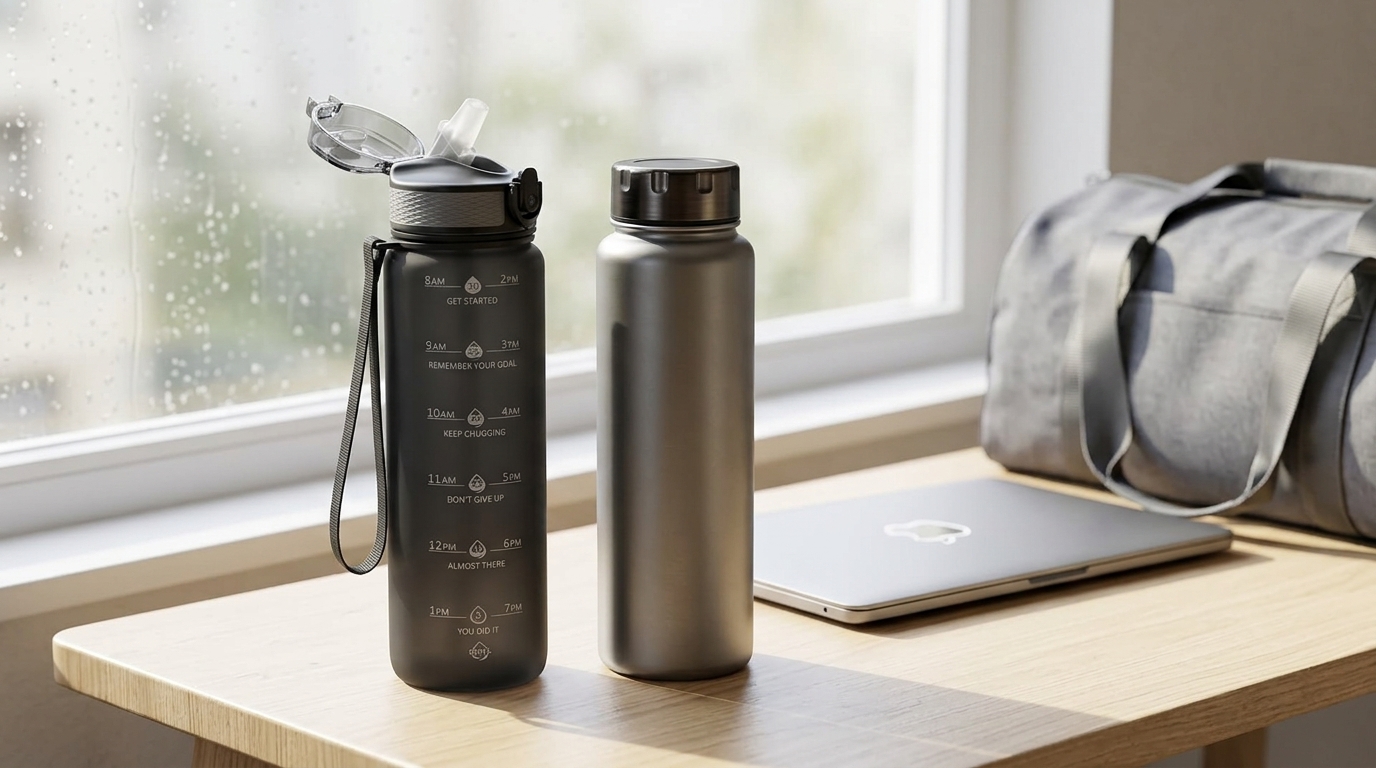
Who should buy a non-insulated bottle?
Picking the right lid: straw vs chug vs wide-mouth
Lids change the daily experience as much as insulation does. Here’s how to choose without overthinking it.
Hyeta pick
Compare the current Hyeta bottle options
If you want a practical bottle for work, gym, travel, or everyday carry, check the current Hyeta listing before you choose your lid style and size.
Straw lid
- Best for: desk work, driving, treadmill, steady sipping
- Why it’s great: convenient, encourages frequent sips
- Watch-outs: often has more parts to clean (straw, valve, gasket)
Chug/spout lid
- Best for: gym sessions, quick hydration breaks, commuting
- Why it’s great: faster flow than many straws, typically fewer parts
- Watch-outs: can splash if you tip fast; check for leak resistance in a bag
Wide-mouth cap (simple screw top)
- Best for: minimalists, travelers, hikers, easiest cleaning
- Why it’s great: simplest build, easy to add ice and clean thoroughly
- Watch-outs: less “one-handed” for driving or workouts
Materials: stainless steel vs Tritan (and what to expect)
Material choice usually pairs with the insulated vs non-insulated decision, but it’s not all-or-nothing.
Stainless steel
- Common in: insulated bottles (double-wall vacuum designs)
- Pros: durable, great for temperature retention when insulated, premium feel
- Considerations: can dent from hard drops; insulated versions are heavier
Tritan (durable plastic)
- Common in: non-insulated bottles
- Pros: lightweight, often slim, easy to see your water level
- Considerations: can scratch over time; may show wear sooner than steel
Note: Regardless of material, the biggest “real life” differences usually come down to insulation, lid style, and how you carry it (cup holder, backpack pocket, or clipped to a bag).
Real-world scenarios (choose in 10 seconds)
- You commute and hate wet backpacks: Choose insulated (less bottle sweat) + leak-resistant lid.
- You work at a desk and sip all day: Choose insulated + straw lid, or non-insulated if you refill often and prefer lighter carry.
- You hit the gym after work: Choose insulated if you want cold water through the whole session; choose non-insulated if bag weight and simplicity win.
- You travel with a carry-on and count ounces: Choose non-insulated Tritan-style bottle for a lightweight water bottle for travel.
- You mostly drink room-temp water: Choose non-insulated—you may not benefit much from insulation.
Cleaning and care: keep it simple (and consistent)
Whichever bottle you choose, you’ll be happier if it’s easy to clean the way you actually live.
Hyeta pick
Match the bottle to your routine
Compare colors, sizes, and current availability so your bottle fits the way you actually carry and refill it each day.
- Fewer parts = easier routine. If you know you won’t disassemble a complex lid often, consider a simpler cap.
- Prioritize a wide opening if you use ice, add mixes, or want easy scrubbing.
- Check manufacturer instructions for dishwasher safety (especially for lids, seals, and printed finishes).
Hyeta pick
Ready to decide?
A quick look at the live listing helps confirm current price, color availability, and the details that matter for daily use.
Bottom line: which one is “worth it”?
An insulated bottle is usually “worth it” if you care about cold (or hot) drinks staying that way for hours, and if you want less condensation on your desk, in your car, or in your bag. A non-insulated bottle is usually “worth it” if you prioritize lighter carry, a slimmer profile, and the simplest possible cleaning routine.
If you want a safe, practical default for most people: insulated for commuting and long days out, non-insulated for lightweight travel and minimalist everyday carry.
Next step: Pick your main use case (work, gym, travel) and then choose the lid style you’ll actually use daily. That combo matters more than chasing “perfect specs.”
FAQ
Is an insulated bottle always better?
No. Insulated bottles are great for temperature retention and reducing condensation, but they can be heavier and bulkier. If you refill often and want a lighter carry, non-insulated can be the better fit.
What’s the best water bottle for commuting?
For many commuters, an insulated bottle is a strong pick because it helps keep drinks cold and reduces “sweat” in bags. If cup-holder fit and weight matter most, a slim non-insulated bottle can also work well—especially if you refill at the office.
Should I get an insulated water bottle for the gym?
If you prefer ice-cold water during your workout or your bottle sits in a warm environment, insulated is a comfort upgrade. If you want the lightest gym bag and you don’t mind water warming up, non-insulated is perfectly fine.
Do insulated water bottles sweat?
They typically sweat much less than non-insulated bottles because the exterior stays closer to room temperature. Moisture can still collect around lids or threads depending on humidity and lid design.
What’s the most lightweight water bottle for travel?
Many travelers like non-insulated Tritan-style bottles because they’re lightweight and pack easily. If you’re carrying it all day, the weight difference can be noticeable.
Editorial note: Product features like insulation performance, leak resistance, and dishwasher safety vary by model and lid. Always confirm details on the specific product page before buying.